Why standard drill bits aren’t enough
Porcelain stoneware is harder than most natural stone and absorbs hardly any water. A masonry drill bit with a carbide tip quickly becomes blunt in it or can crack the tile. Diamond tile drill bits grind through the material instead, without hammering. So always drill with the hammer function switched off.
Choose the right tile drill bit
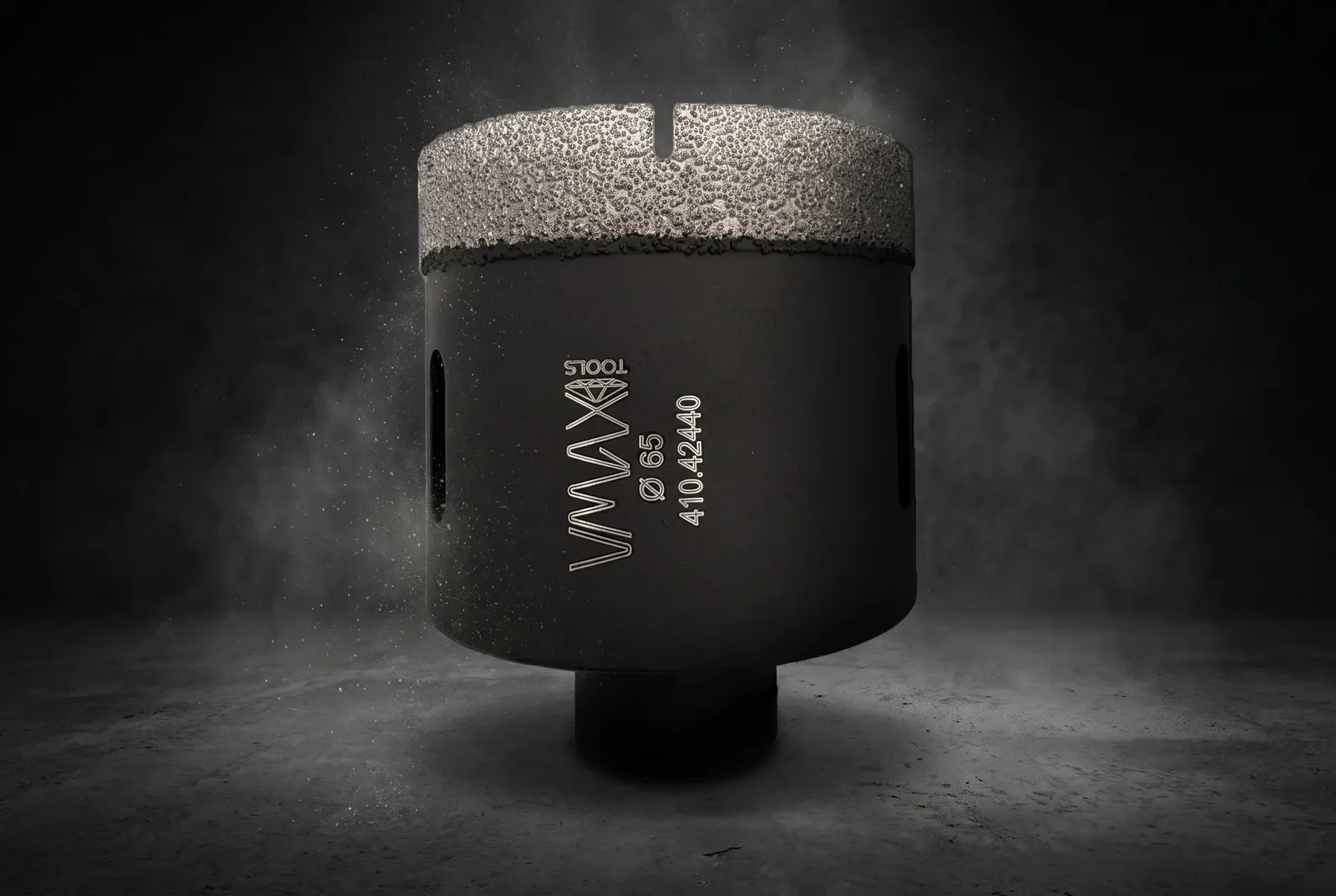
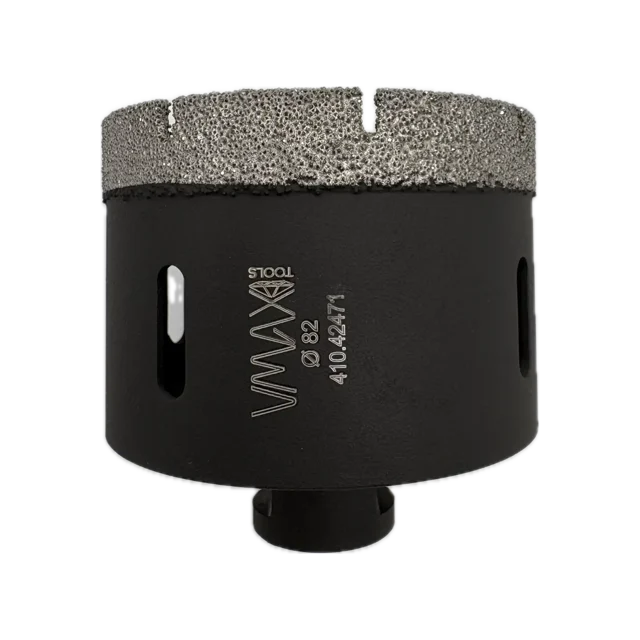
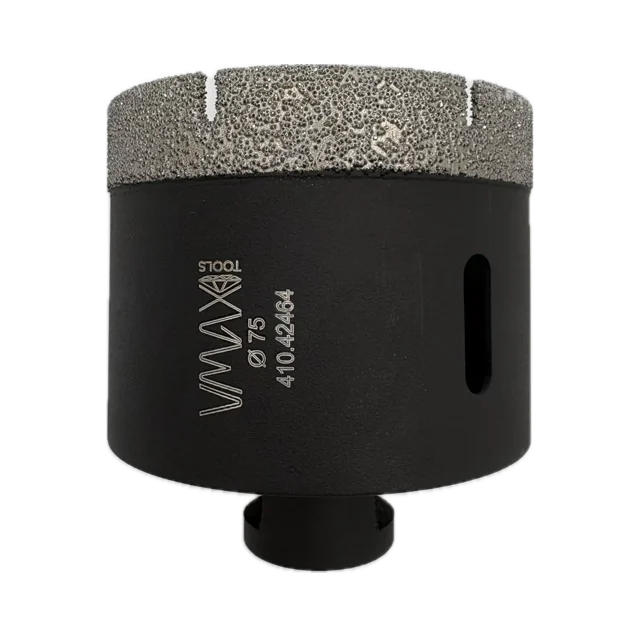
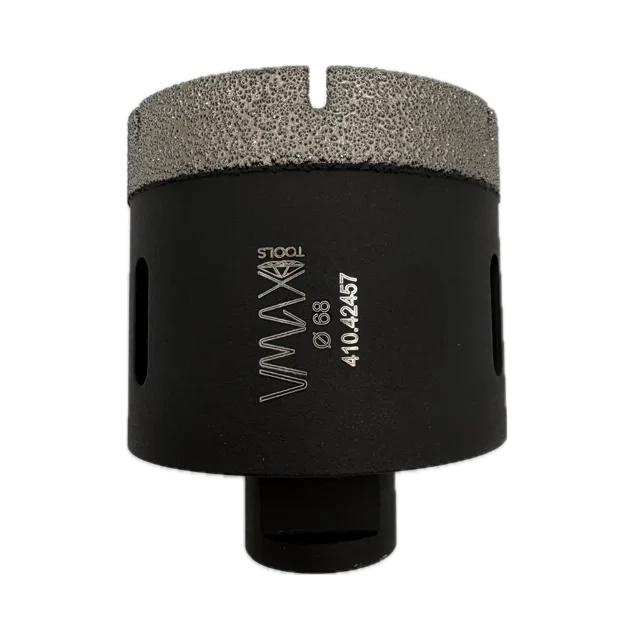
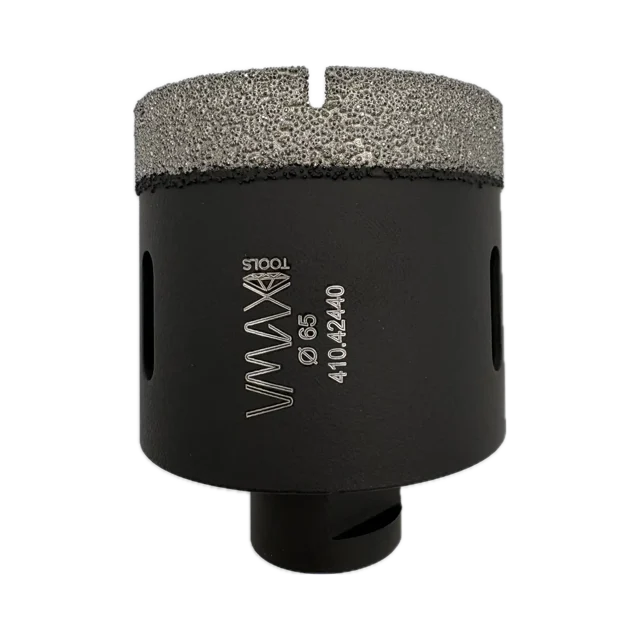
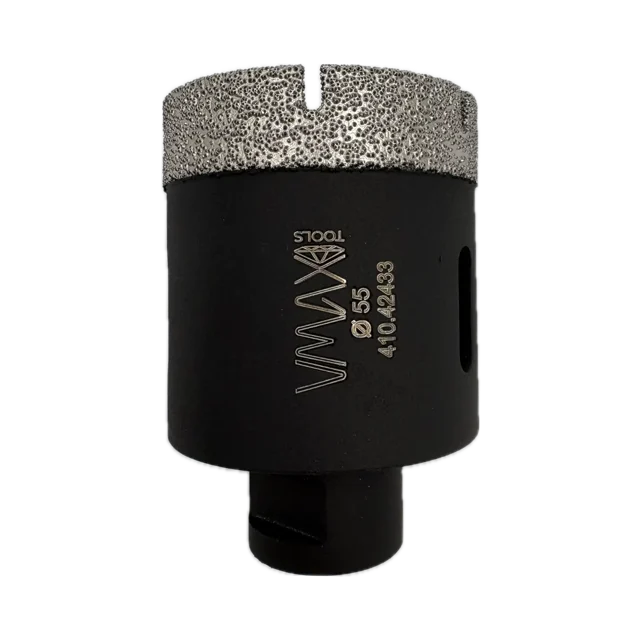
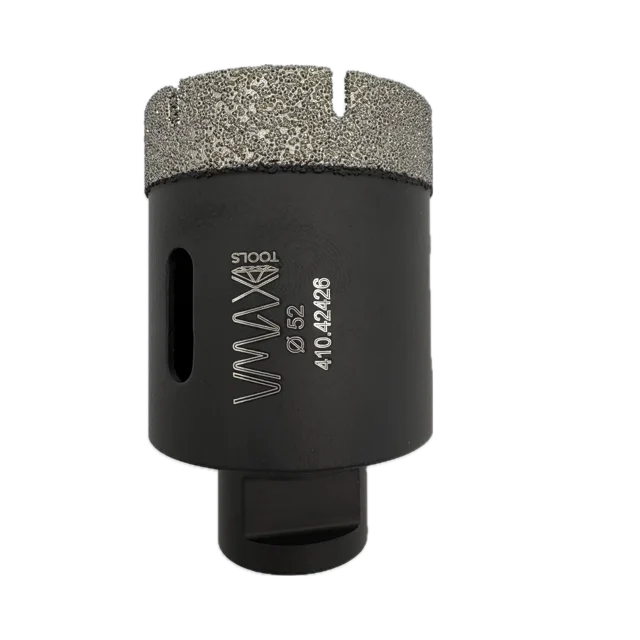
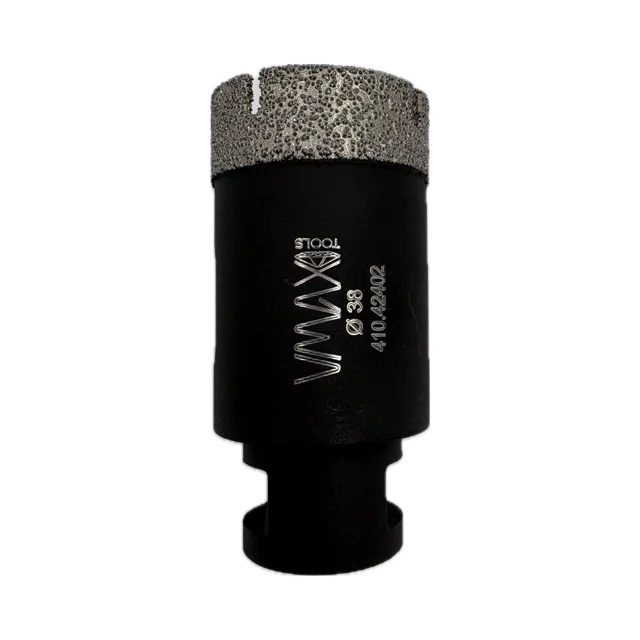
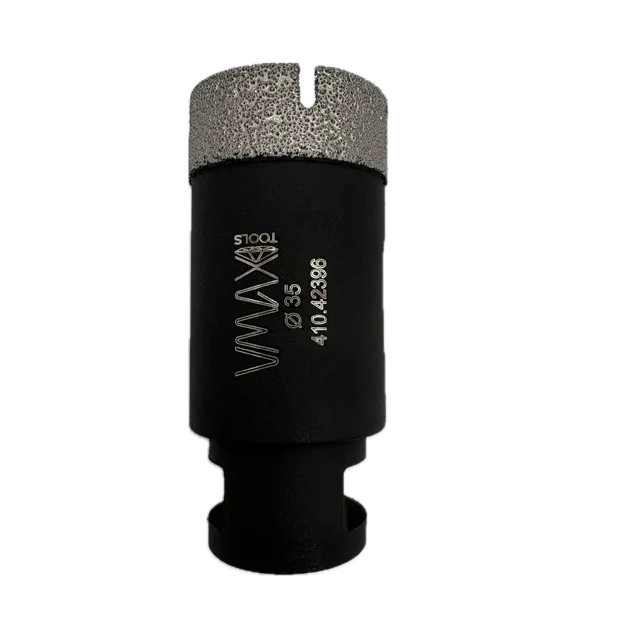
For holes from 20 mm, such as for electrical outlets or pipes, use tile drill bits with an M14 connection for the angle grinder.
For small holes from 5 to 14 mm, such as for wall plugs, there are tile drill bits with cooling wax. They have an M14 connection or a HEX shank for the cordless drill.
Step by step
Here’s how to drill clean holes:
- Mark the drilling point and use a drilling template for large holes
- Start the drill bit at an angle until a small groove forms
- Then slowly straighten it and drill with light pressure
- Work with gentle circular movements so the diamonds can cut freely
- Reduce the pressure further just before breaking through
Don’t forget cooling
Heat is a tile drill bit’s greatest enemy. In drill bits with cooling wax, the wax inside melts and cools the cutting edge. For large diameters, take short breaks to let the drill bit cool down. If you smell burning or the drill bit changes colour, it is too hot.
Tile drill bits from VMAX
Frequently asked questions
Yes, for small holes with a tile drill bit with a HEX shank. Choose a medium speed and switch off the hammer function.
It depends on the material, diameter and cooling. Drilling without pressure and avoiding overheating significantly extends the service life.
View all tile drill bits
From 5 to 82 mm, with an M14 connection or HEX shank.